FOOD TRAILER BLUEPRINT™
Launch a profitable food trailer business serving festivals, private events, and loyal local customers.
Learn the equipment, licensing, commissary requirements, startup costs, and marketing systems used by successful food trailer operators.
THE BUSINESS CASE
WHY THIS BUSINESS WORKS
SPEC-ID: 01
STRONG EARNING POTENTIAL
Command premium pricing at high-traffic events and private catering gigs with focused service models.
SPEC-ID: 02
LOW OVERHEAD
Eliminate expensive commercial leases and operate efficiently with a lean crew and minimal food waste.
SPEC-ID: 03
FLEXIBLE MENUS
Rapidly pivot your offerings to match local demand, seasonal trends, and specialized venue requirements.
SPEC-ID: 04
SCALABLE OPERATIONS
Systematize your processes to build an operation that scales rapidly into a fleet of mobile units.
INCOME POTENTIAL
WEEKEND SIDE HUSTLE
$2,000 - $8,000
/month
Festivals and private events
FULL-TIME OPERATOR
$5,000 - $20,000
/month
Regular events and catering
SCALED OPERATION
$25,000+
/month
Multiple trailers and staff
TRANSPARENT BREAKDOWN
ESTIMATED STARTUP COSTS
USED BASIC TRAILER
$10K – $30K
NEW CUSTOM TRAILER
$30K – $100K+
PERMITS & INITIAL INVENTORY
ADDITIONAL
TECHNICAL REQUIREMENTS
ESSENTIALS FOR LAUNCH
This is your non-negotiable checklist. Separate the professionals from the amateurs by securing the exact hardware and legal clearance required to operate.
EQUIPMENT NEEDED
- Commercial cooking equipment
- Refrigeration and prep stations
- 3-compartment sinks and plumbing
- High-capacity generator
- Point of sale (POS) system
- Fire suppression system
- Trailer and towing vehicle
LICENSING & COMPLIANCE
- Local business license
- Health department permits
- Fire marshal inspection
- Commissary kitchen agreement
- Food handler certifications
- Commercial business insurance
WHO PAYS FOR YOUR FOOD?
WAYS TO MAKE MONEY
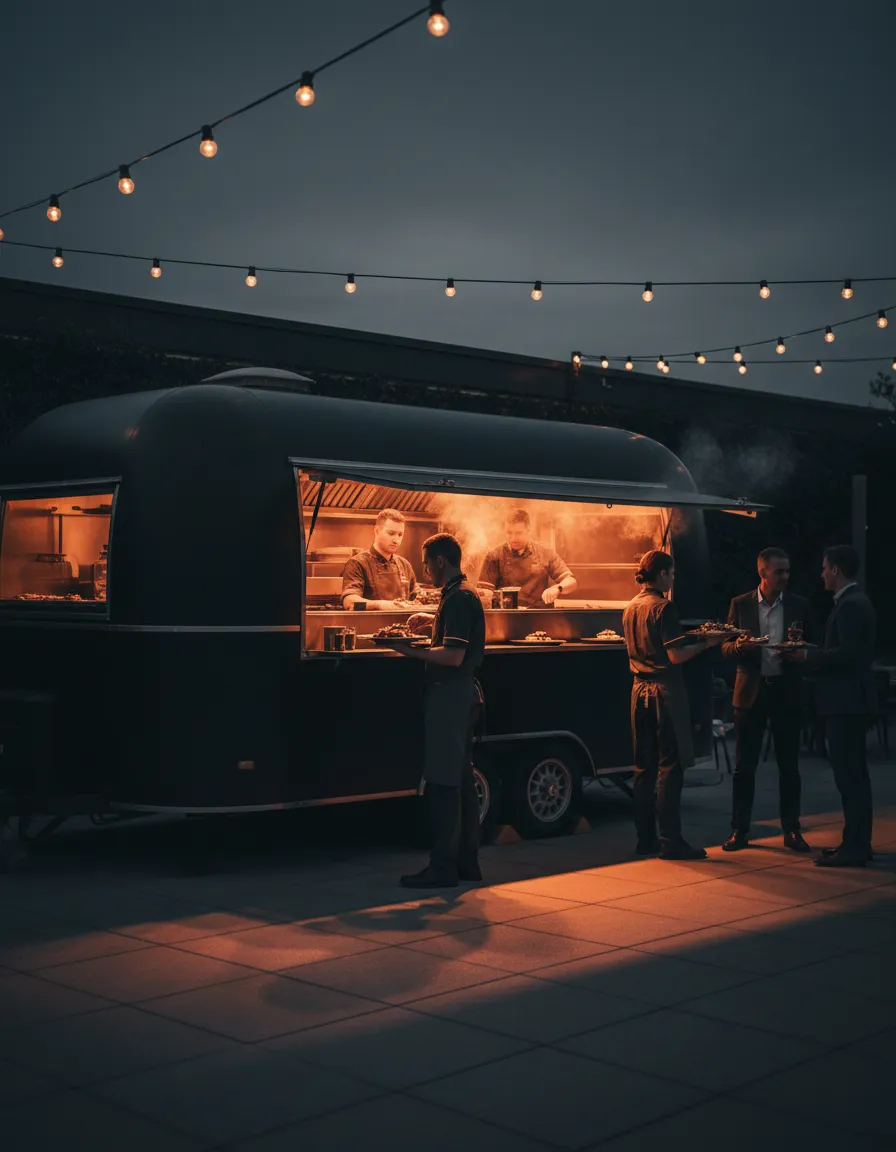
- High-volume festivals and county fairs
- Lucrative corporate catering events
- Consistent brewery and recurring location shifts
IDEAL CUSTOMERS
- High-spending event attendees and fairgoers
- Local families and neighborhood communities
- Wedding hosts and private party organizers
ACQUISITION SYSTEM
HOW TO BOOK EVENTS
01
SPEC-01: DIGITAL PRESENCE
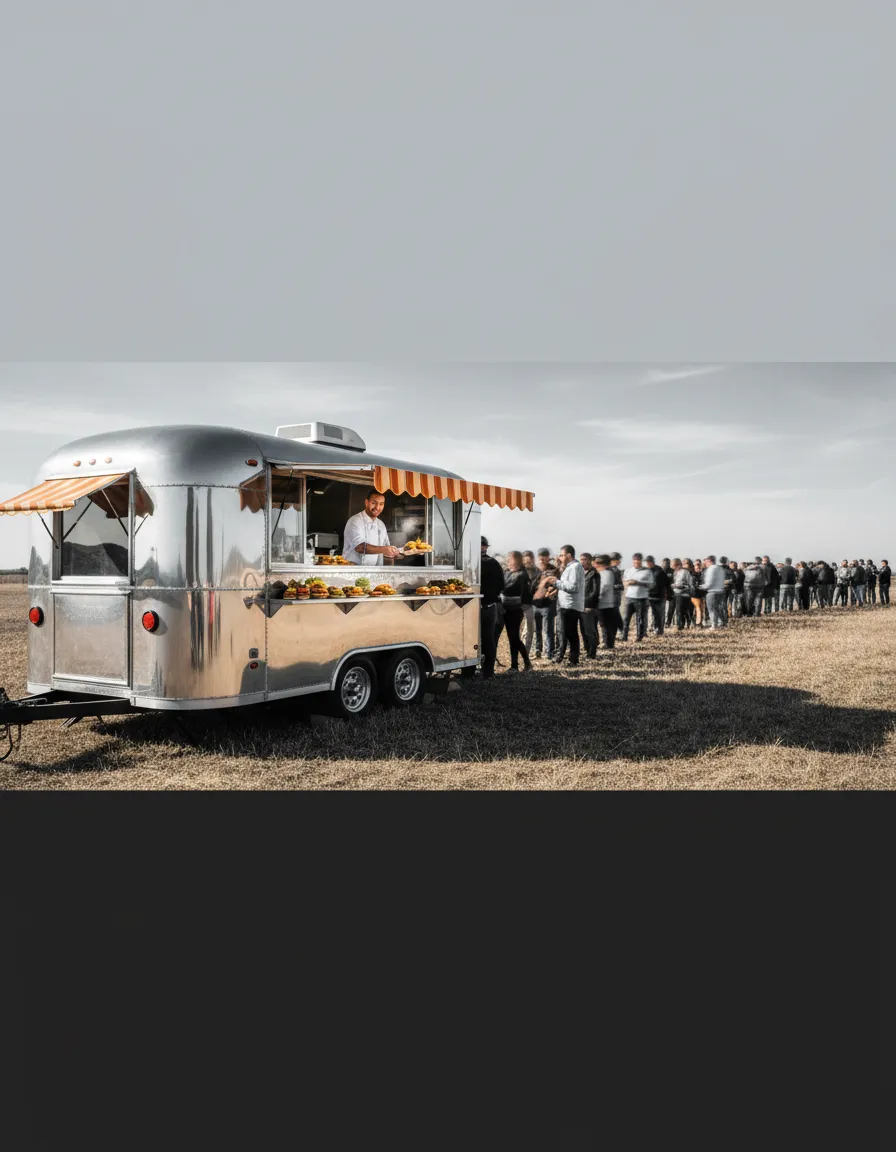
Dominate local search and social. Optimize your Google Business Profile and leverage Instagram and TikTok to build pre-event hype and a loyal local following.
02
SPEC-02: DIRECT OUTREACH
Proactively connect with event organizers and local businesses. Send targeted pitches for private catering and secure highly profitable, guaranteed-revenue gigs.
03
SPEC-03: PARTNERSHIPS
Establish recurring revenue streams. Partner with local breweries, corporate parks, and wedding venues to lock in reliable weekly schedules and referral programs.
SPEC-ID: HAZARD-01
- Ignoring strict local health codes and fire permit requirements.
- Overcomplicating the menu, permanently crushing service speed.
- Underestimating hidden event fees and daily overhead costs.
- Poor inventory control leading to massive food waste.
- Deploying weak, forgettable branding in a crowded festival field.
CRITICAL PITFALLS
MISTAKES TO AVOID
Most operators fail because they try to figure it out on the fly. The Built On Wheels™ Blueprint equips you with exact frameworks for menu engineering, inventory tracking, and event ROI analysis—so you launch profitably from day one without the expensive trial and error.
FREE STARTUP CHECKLIST
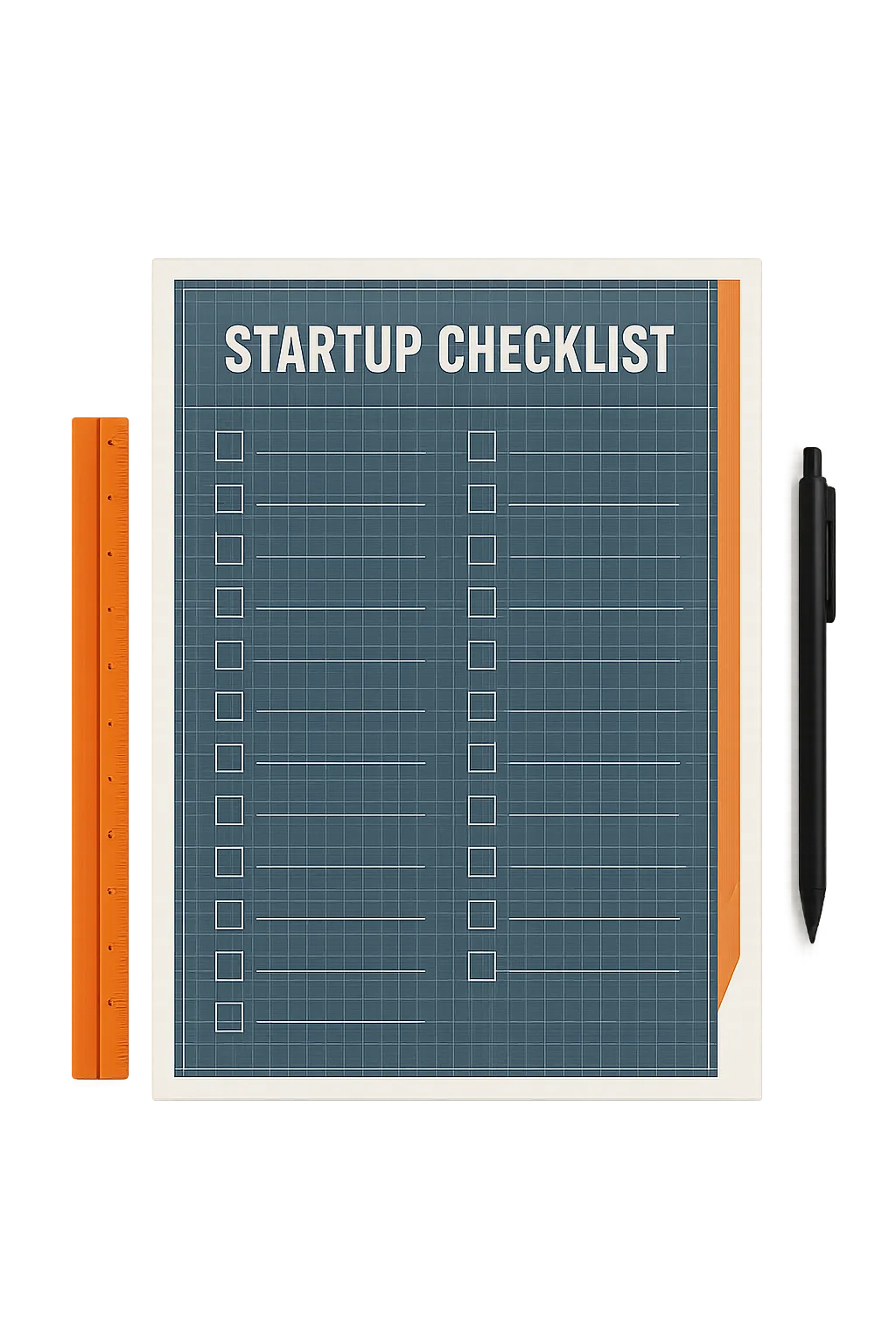
GET THE FREE CHECKLIST
Download the exact checklist to launch your food trailer business the right way. Covers equipment, licensing, commissary requirements, and essential startup costs.
100% Free. Secure & spam-free.
SPEC-ID: BOW-COMM-01
BUILD WITH REAL SUPPORT
Join the Built On Wheels™ community for training, templates, and practical guidance from real operators.
Clarity Before You Commit
COMMON QUESTIONS
Every detail matters when launching a food trailer. Here are the logistical realities you need to know before hitting the road.
Do I need a commissary kitchen to operate?
In most jurisdictions, yes. A commissary kitchen is a licensed commercial facility where you prep food, clean equipment, and safely dispose of gray water. It is almost always a prerequisite for local health department approval.
How much do event and festival spots typically cost?
Fees vary widely based on the event's size and location. Small local events might charge a flat fee of $50–$200, while massive multi-day festivals may charge thousands or take a percentage of your total sales (typically 15-25%).
What is the realistic earning potential?
Earning potential depends on your schedule and operational scale. A weekend-only setup can generate $2,000–$8,000 monthly, while full-time operators at high-volume events regularly see $10,000–$25,000+ per month.
What permits and licenses are required?
Requirements vary by county and city, but generally include a general business license, health department permits (for the trailer and your commissary), fire inspections, food handler certifications, and commercial liability insurance.
Can I start with a used food trailer?
Absolutely. A used trailer reduces initial startup costs significantly ($10,000–$30,000 compared to $30,000+ new). However, you must ensure it passes local health and fire inspections before purchasing, as retrofitting non-compliant equipment can become expensive.
FINAL STEP
START THE SMART WAY
Download the free checklist and begin building a real business on wheels.
Includes comprehensive startup costs & compliance requirements.

Built On Wheels™ provides premium blueprints for launching and scaling high-profit food trailer businesses. Practical systems, no fluff.
© 2026 Built On Wheels™. All rights reserved.
QUICK LINKS
Earnings
Equipment
Licensing
FAQ
FOLLOW US


