BUILT ON WHEELS™
Launch a profitable mobile coffee business serving events, offices, markets, private parties, and local pop-ups.
Learn the startup costs, equipment, licensing basics, menu setup, booking strategy, and operating systems used by successful mobile coffee bar operators.
STRATEGIC ADVANTAGE
Why Mobile Coffee Dominates
DAILY REPEAT DEMAND
Unlike seasonal concepts, coffee secures consistent, habitual daily transactions across multiple dayparts.
LOWER STARTUP COST
Bypass the massive overhead of brick-and-mortar buildouts, long-term leases, and rigid zoning restrictions.
DIVERSE EVENT REACH
Deploy flexibly across corporate events, weddings, private parties, and daily high-footfall markets.
HIGHLY BRANDABLE
A moving billboard that commands visual attention and organically markets itself in busy public spaces.
STRONG UPSELL POTENTIAL
Multiply transaction values with high-margin pastries, cold brews, and seasonal specialty menus.
SCALABLE OPERATIONS
Start agile with an espresso cart and logically scale up to a full trailer or multi-unit fleet.
INCOME POTENTIAL
True Earning Potential
Map out realistic revenue projections for your mobile coffee business based on scale and operational capacity.
EVENT SIDE HUSTLE
$2,000–$6,000
/MONTH
Weekend events and small pop-ups
FULL-TIME OPERATOR
$5,000–$15,000
/MONTH
Markets, offices, events, and private bookings
PREMIUM OPERATION
$20,000+
/MONTH
Corporate accounts, weddings, festivals, and multiple units
ENTRY POINTS
Estimated Startup Investment
|
Basic Coffee Cart Setup
|
$2,000 – $8,000 |
|
Professional Espresso Cart
|
$8,000 – $20,000+ |
|
Coffee Trailer or Van Build
|
$20,000 – $75,000+ |
|
Permits, Inventory & Branding
Additional baseline costs vary by market
|
Variable |
Blueprint Requirements
Essential Mobile Equipment
SPEC-01
Espresso Machine
SPEC-02
Grinder
SPEC-03
Water System
SPEC-04
Power / Generator
SPEC-05
Refrigeration
SPEC-06
Ice Storage
SPEC-07
Cups / Consumables
SPEC-08
POS System
Match Services To Demand
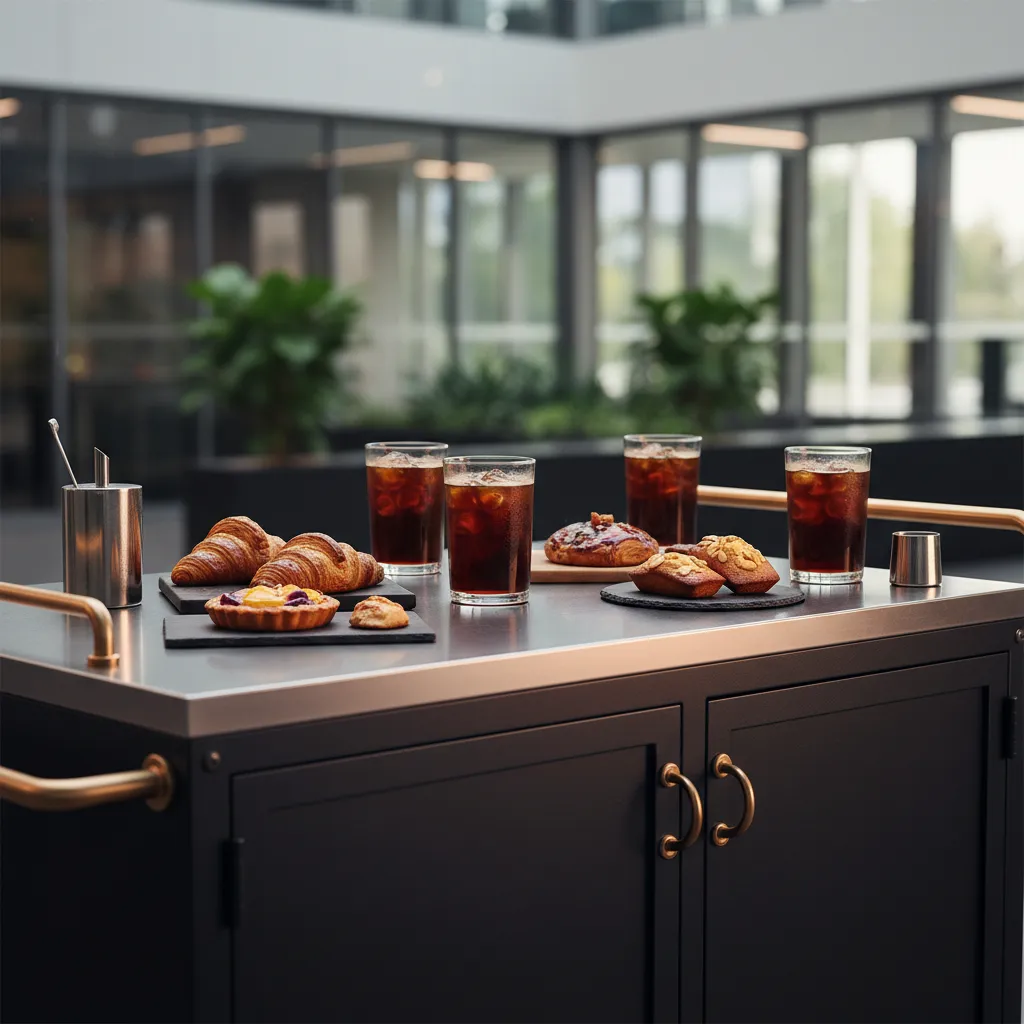
Espresso & Cold Brew Packages
Deploy high-volume beverage stations designed for corporate engagements, office building lobbies, and premium weddings. This core service drives rapid throughput with industrial-grade efficiency.
- High-margin core menu architecture
- Scalable for 100+ guest private events
- Consistent daily recurring demand
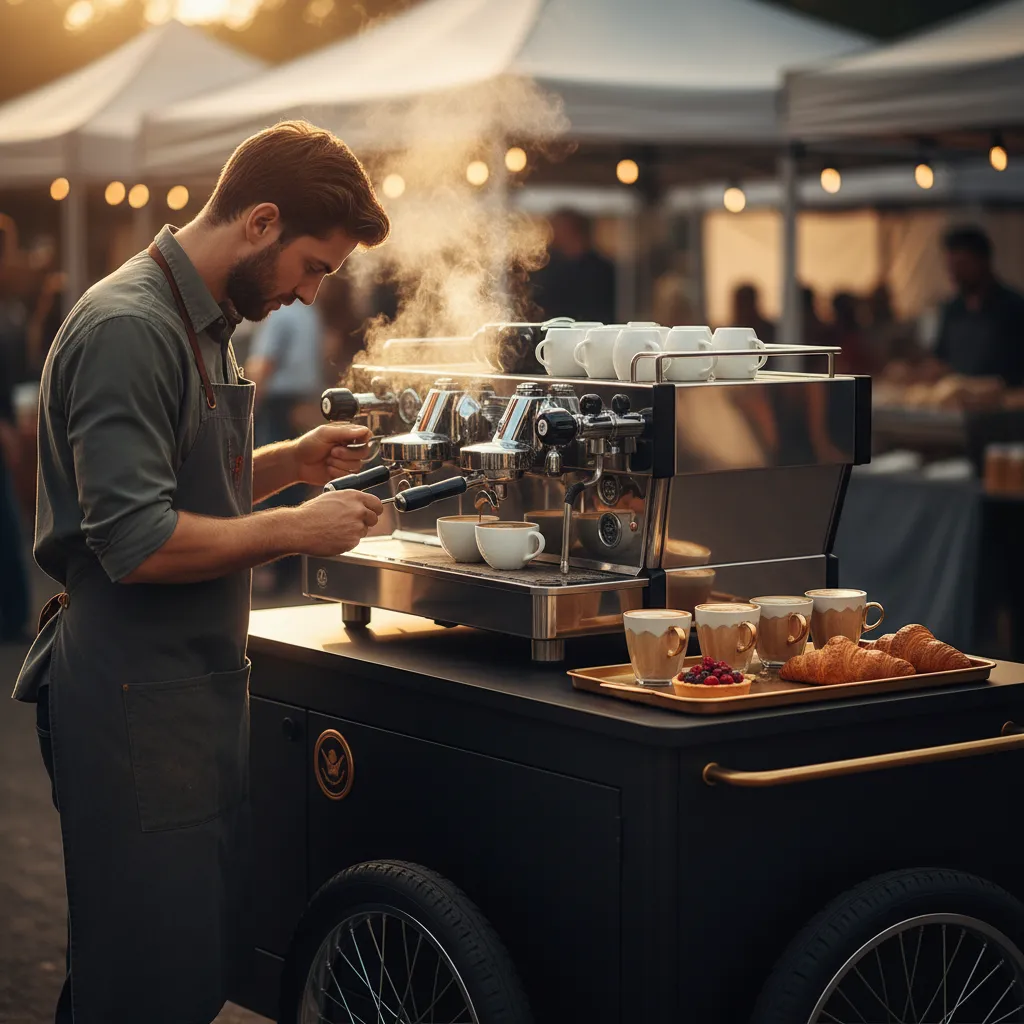
Pastries & Specialty Lattes
Perfectly suited for farmers markets, community pop-ups, and weekend festivals. Curate seasonal offerings and add-ons that maximize your average order value at public events while building local brand loyalty.
- Boosts average order value (AOV)
- High visual appeal for social media
- Flexible seasonal menu rotations
LICENSING & COMPLIANCE
Know The Rules Before You Launch
Navigating legal requirements is the most critical step before booking your first event. Build your operation on a solid foundation by securing the mandatory permits.
BUSINESS & LEGAL
Business License
Required to operate legally within your city or county limits.
Insurance Coverage
General liability and commercial auto (if towing) to protect your assets.
Event Vendor Permits
Often required by organizers for large festivals or public gatherings.
HEALTH & SAFETY
Health Dept. Permit
Your cart or trailer must pass local mobile food facility inspections.
Commissary Agreement
Most health departments require an approved commercial kitchen for prep and cleaning.
Food Handler Card
Required for all operating staff.
Fire & Safety
Generator and fire regulations where applicable.
SPEC-02 // ADVISORY
CRITICAL WARNING:
LOCAL VARIANCES
Licensing rules vary by city, county, and state. Always verify local health department and city ordinance requirements before purchasing equipment or operating.
BOOKING STRATEGY
Book Your First Events
Stop waiting for the phone to ring. Secure high-profit bookings by aggressively targeting these five proven channels to fill your calendar.
Google Business Profile
Capture high-intent local searches for 'mobile coffee near me'.
Instagram & TikTok
Showcase your setup and visually sell the premium mobile coffee experience.
Event Planners
Build recurring referral pipelines with local wedding and event coordinators.
Corporate Outreach
Pitch office managers directly for high-volume employee appreciation days.
Markets & Pop-Ups
Anchor your weekly schedule with farmers markets, breweries, and community events.
Critical Mistakes To Avoid
Most mobile coffee operators don't fail because of bad coffee. They fail due to poor planning, overextending on gear, and ignoring operational realities. Protect your profit margins by avoiding these common traps.
ERR-01
Expensive Gear Early
Sinking capital into a massive dual-group espresso machine before verifying local demand drains your operational runway.
ERR-02
Oversized Menu
Offering too many complex drinks slows down service speed and drastically increases expensive inventory waste.
ERR-03
Underpricing Events
Failing to account for equipment prep, travel time, and breakdown effectively erases your profit margin on private gigs.
ERR-04
Ignored Permits
Assuming health department rules don't apply to mobile cart setups almost always leads to a mid-event shutdown.
ERR-05
Slow Drink Speed
A beautiful setup means nothing if a bottlenecked workflow forces customers to abandon the line during a busy rush.
ERR-06
No Booking Strategy
Relying purely on organic foot traffic instead of actively pitching event organizers and corporate clients for locked-in revenue.
FREE STARTUP RESOURCE
Get The Startup Checklist
Download the checklist to plan your mobile coffee bar setup, equipment, menu, permits, and first bookings. Start building a profitable business on wheels today.
- Plan your mobile coffee bar setup
- Essential equipment checklist
- Menu and inventory basics
- Local permit requirements
BUILT ON WHEELS™ COMMUNITY
Build With Real Support
Join the Built On Wheels™ community for training, templates, setup examples, and practical guidance from real mobile operators.
Instant access • Proven strategies • Operator network
Technical FAQ
Do I need a health permit?
In most jurisdictions, yes. Any business serving consumable beverages requires health department approval. Rules vary depending on whether you handle fresh milk and open ingredients versus pre-packaged items.
Do I need a commissary?
A commissary is often required to wash equipment, dispose of wastewater, and safely store supplies—especially if you handle dairy. However, some regions offer exemptions for fully self-contained carts.
Can I start with a cart instead of a trailer?
Absolutely. Many operators start with a $2,000–$8,000 cart setup to prove their concept and secure regular bookings before reinvesting profits into a full trailer or van build.
How much should I charge for private events?
Pricing typically factors in an hourly minimum, travel distance, and guest count. Most private event packages start between $400 and $800 to ensure your fixed costs and travel time are fully covered.
What equipment do I need first?
Your core mobile setup requires a reliable commercial espresso machine, a high-quality grinder, a water delivery system, and a stable power source (such as a generator or a robust battery system).
Can this work part-time?
Yes. The mobile model is highly flexible, making it ideal for weekend pop-ups, Saturday farmers markets, and occasional private bookings without the constant overhead of a daily brick-and-mortar cafe.
Start The Smart Way
Download the free checklist and begin building a real business on wheels.
100% Free PDF Download • Instant Access


© 2026 Built On Wheels™. All rights reserved.
Terms of Service | Privacy Policy